Field Trips & Workshops
Culture & History Field Trip Hub
Educator Quick Menu:
Culture & History: In-Museum Expeditions
Step out of the classroom and directly into the true history of our region! Explore the ancestral people of these lands, trace ancient waterways, and experience history through the authentic voices, historic artifacts, and living legacies. Bring the history of our region to life where it belongs: through the stories and objects of the people who shaped it! In these in-museum field trip expeditions, developed in direct collaboration with native sovereign nations, Burpee’s expert educators and historians guide your students. By pairing guided gallery tours with hands-on anthropological lab investigations, students will look the past right in the eye, literally. They will examine thousands of years of material culture, map the ancestral tribal territories of the Upper Mississippi River Valley, and handle real natural resources, hand-pressed pottery, and trade goods to discover how vibrant human communities masterfully engineered and protected their way of life.
Booking Details & Logistics:
- Target Audience: Programs are custom-tailored for all age levels, from Pre-K through High School and adults. From assisted living centers to community events.
- Flexible Formats: Available as small-group classroom workshops, rotating setups, or large auditorium assemblies.
- Travel Range: Proudly serving Rockford, the surrounding Winnebago County, and regional school districts.
🦎 Our Culture & History Programs:
Click the title to jump to descriptions and standards!
Native American Stories: Art, Nature, & Culture
Key Concepts: Oral traditions, cultural expression through art, natural resource utilization, seasonal changes, and storytelling preservation.
Listen and Observe
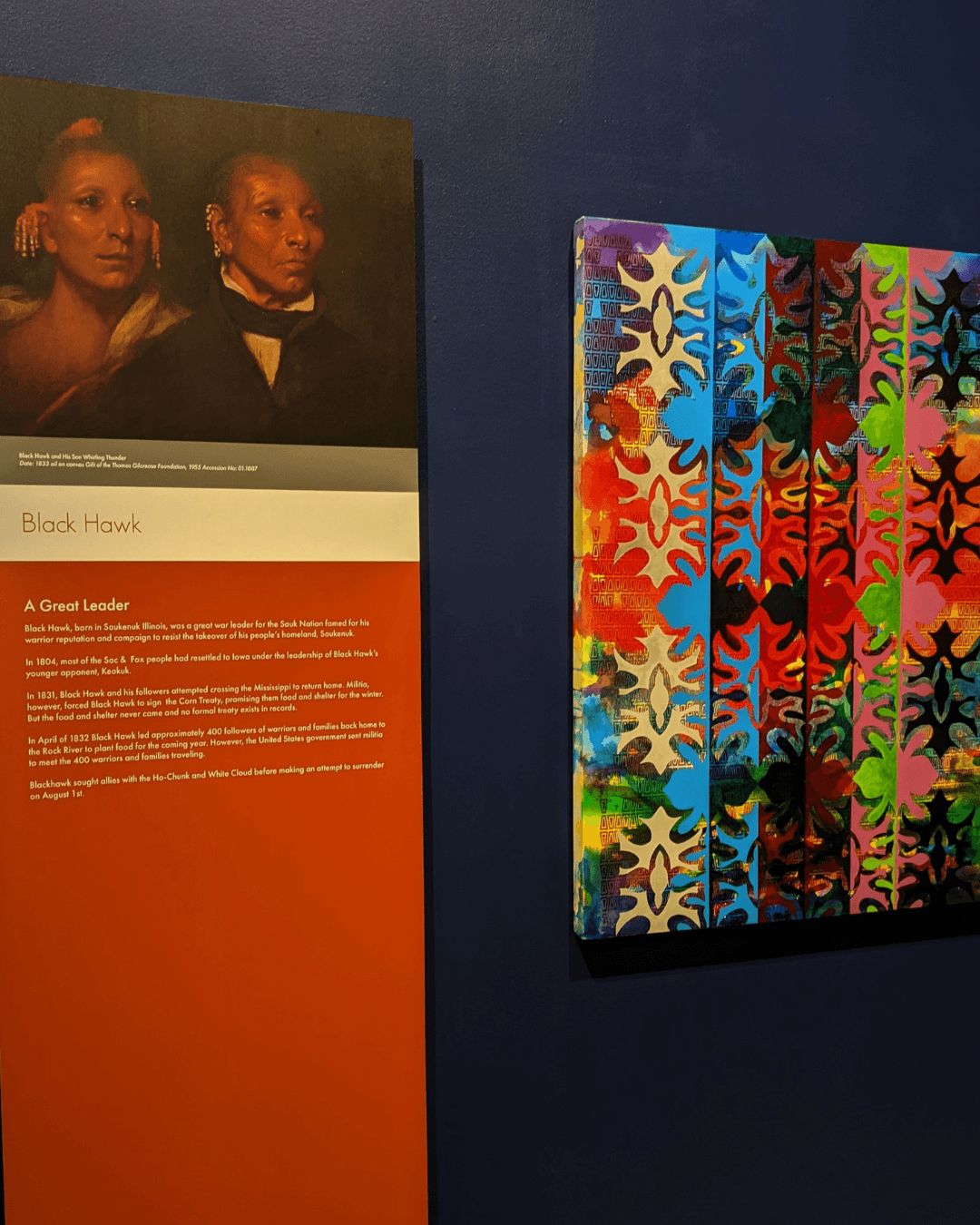
Discover history through the beautiful traditions, oral histories, and artwork of native american indian nations. This tactile experience uses the direct words and stories shared by tribal delegations to explore how communities connect with the land. History comes alive through creativity and connection! A Burpee educator shares the authentic heritage of local nations using the exact stories and insights provided by the tribal delegations who partnered with the museum. Guests will look closely at modern masterpieces by Sac and Fox, Potawami, Ojibwe artists, listen to accounts of historical heroes like Black Hawk, handle real natural materials like birch bark and clay, and discover how traditional art reflects deep relationships with local wildlife and ecosystems.
🎓 Curriculum Alignment Matrix (K-12 Grade Tracks)
Our curriculum adaptively shifts terminology, difficulty, and hands-on activities based on the targeted age group to hit key standard benchmarks:
🧩 Kindergarten: Working with the Land. Young students explore the immediate relationship between early families and nature. By listening to traditional oral stories about seasonal changes, they investigate how people gathered resources from the earth without modern technology.
Core Focus: Natural resources, shelter materials, seasonal food gathering, and animal characters in traditional stories.
Standards Unlocked & How We Do It:
- K-ESS3-1: Handling and sorting natural raw materials (birch bark, cattails, clay) to model how early regional families gathered resources directly from their local environment to meet everyday needs for food, clothing, and shelter.
- K-LS1-1: Sharing collaborative tribal stories about native wildlife to observe and map patterns in what plants and animals need to survive across local prairies and woodlands.
🧩 1st-2nd Grade: Passing Down Traditions. First graders explore how families keep history alive across generations. Students analyze physical artifacts like hand-woven baskets and clay dolls alongside modern artwork to see how knowledge is shared over time.Core Focus: Family structures, oral histories, artistic symbols, and tool engineering.
Standards Unlocked & How We Do It:
- 1-LS1-2: Listening to authentic oral histories provided by tribal elders to analyze behavioral patterns of how parents teach, protect, and pass down ancestral survival knowledge to their offspring.
- 1-PS1-1: Inspecting natural tools—such as bone needles and stone scrapers, to discover how the physical properties of natural materials dictate how they are shaped to perform specific tasks.
- 2-LS4-1: Comparing the diverse physical resources to evaluate how distinct local habitats shaped different material cultures and artistic styles.
- 2-ESS1-1: Touching and examining hand-pressed clay pottery fragments to identify how geological resources from local Illinois riverbeds were transformed into durable, fire-resistant cooking tools.
Of This Place: Regional Nations & Territories
Key Concepts: Historical cartography, sovereign tribal territories, the geopolitical impacts of early white settlement borders, oral traditions, cultural expression through art, natural resource utilization, seasonal changes, and storytelling preservation.
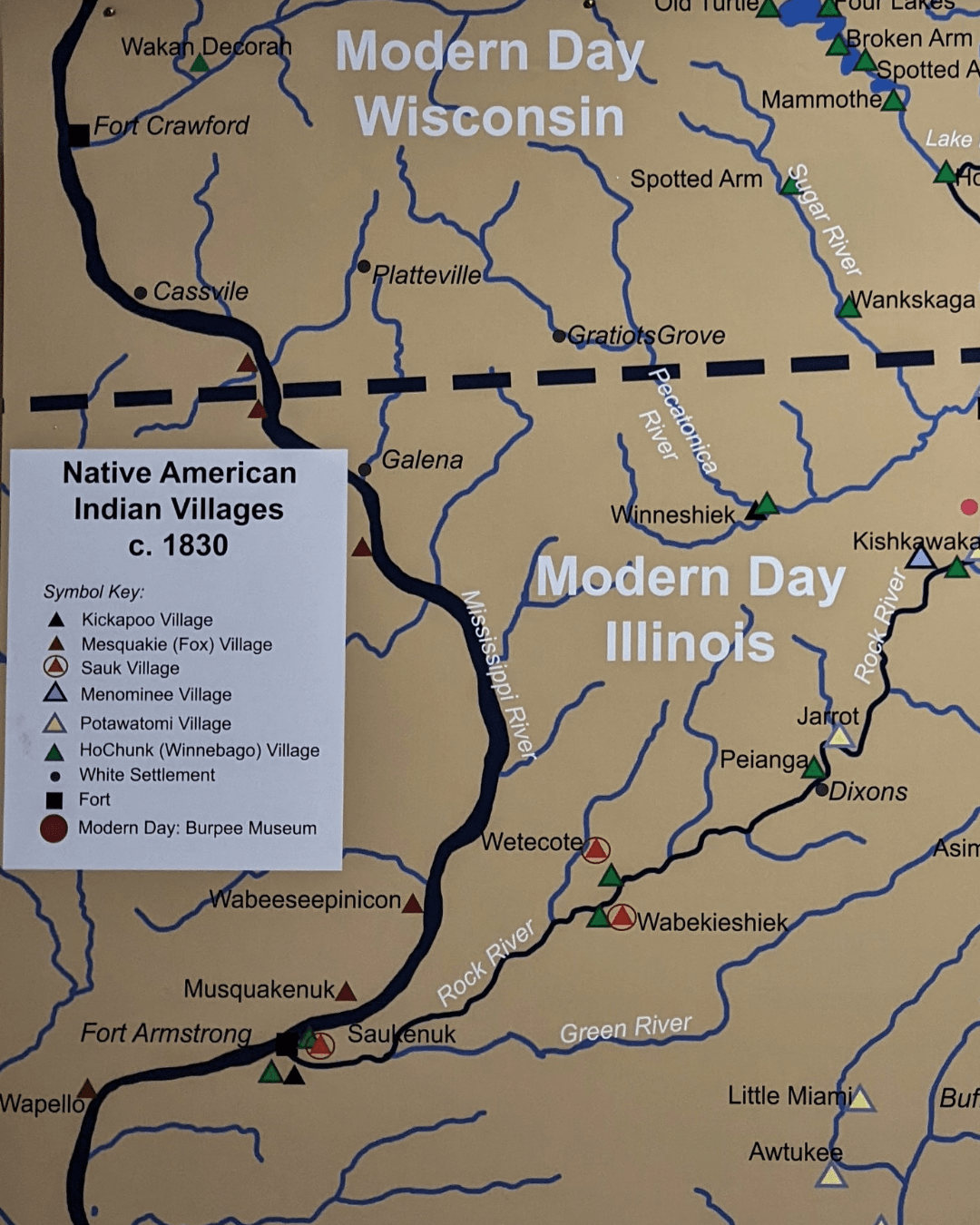
Trace the ancestral lands and villages of the Upper Mississippi River Valley. Using historical maps and regional evidence, students discover how people masterfully engineered and protected their communities. Journey across the rivers and prairies of modern-day Illinois and Wisconsin as they existed two centuries ago. In this deeply immersive geographical and historical expedition, we will explore how people were displaced from this region, their current storie and triumphs. Developed in collaboration with native sovereign nations, students are guided through a specialized exploration circa 1830. Students will trace the waterways that fueled thriving commerce networks, explore the distinct architectures of seasonal villages, and analyze how resource distribution shaped the sovereign territories of regional tribal nations.
🎓 Curriculum Alignment Matrix (K-12 Grade Tracks)
Our curriculum adaptively shifts terminology, difficulty, and hands-on activities based on the targeted age group to hit key standard benchmarks:
🔍 Elementary Minds (Grades 3 – 5): Village Networks, Seasonal Landscapes, and Forced Removal. Upper-elementary students investigate the practical infrastructure of regional tribal communities (Sauk, Fox, Ho-Chunk, Ojibwe, Potawatomi). Students compare physical village locations across regional river valleys and analyze how native engineers utilized specific natural resources to build sustainable, permanent communities.
Core Focus: Natural resource management, changing villages, art and culture, primary source storytelling.
Standards Unlocked & How We Do It:
3-LS4-4: Examining the design of summer bark houses and winter wigwams to analyze how native builders altered their local forest and prairie environments to meet structural survival needs.
4-ESS2-2: Mapping regional river networks on our 1830s cartography display to identify patterns in where major sovereign nations chose to locate their agricultural capitals and trade hubs.
5-ESS3-1: Evaluating how native communities protected local water quality and managed regional wildlife populations, modeling positive human interactions within midwestern ecosystems.
🔬 Middle School (Grades 6 – 8): Geopolitical Shifts & Resource Pressures. Middle school students analyze the structural trade balances between Indigenous networks and early European trading posts, subsequent removal, resource demands and shifted tribal borders.
Core Focus: Inter-tribal trade treaties, resource scarcity, forced removal, art and culture.
🔬 High School (Grades 9 – 12): Sovereignty, Treaties, & Historical Geography. Older students perform critical primary source analysis on the treaties of the early 19th century. They examine how mapping was used as a tool of political pressure, evaluate the geopolitical factors that led to the Black Hawk War of 1832, and investigate how sovereign nations preserve their territorial history and land rights today.
Core Focus: Cartographic bias, treaty text deconstruction, allopatric resource allocation, and modern tribal sovereignty.
Field Trip Pricing and Logistics
In-Person Tours:
- $7.00 per student
- $5.00 flat fee for chaperones
- All staff are free of charge
- $5.00 per class lunchroom fee
- 60 minutes per tour
- $1.00 per student for extra exploration time
- Lab/Workshops add-ons are an extra charge
- Lunchroom can be reserved (ask for details)
Virtual Tours:
- $5.00 per student (Teachers are not charged)
- About 45 minutes per tour
- PLUS FREE UNLIMITED explore time after the tour (same month, same group. Teachers are no charge)
Virtual visits can be scheduled for AM, PM, or both, AND include a Burpee guide.
Contact Us: For more important information about bringing your group to Burpee, contact us at 815-965-3433 Or By Email: nicole.hayes@burpee.org