
Dig Dinos with Burpee!
This is your chance…
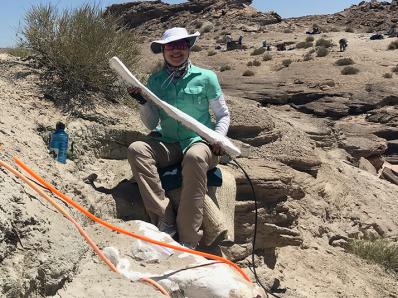
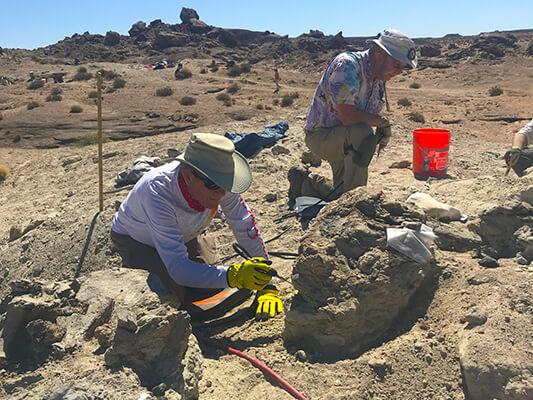
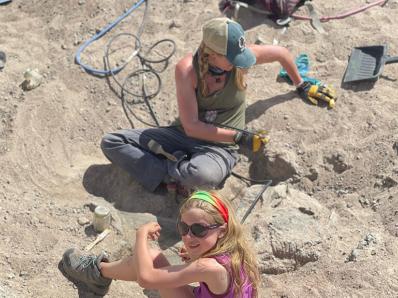
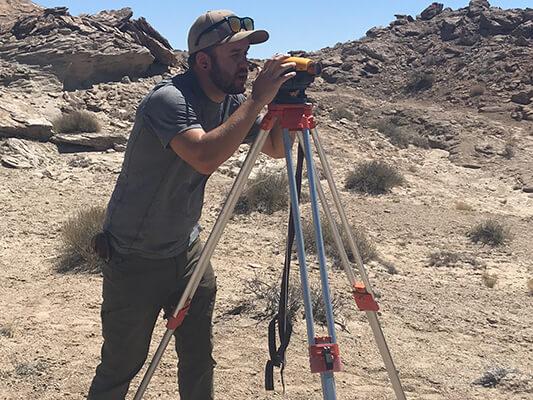
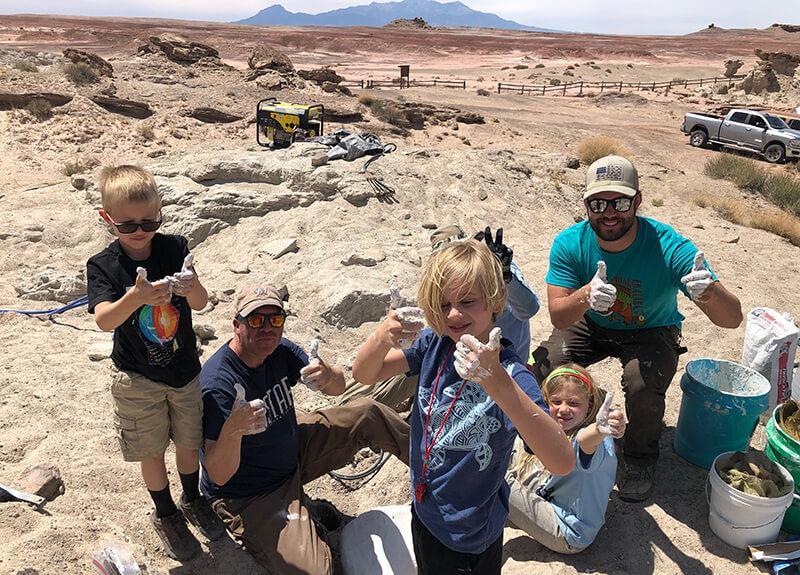
..to dig up real dinosaurs! Join Burpee Museum at the Hanksville-Burpee Dinosaur Quarry in Utah for a hands-on Jurassic adventure! On this guided dinosaur dig, participants will become the paleontology crew and learn how to prospect and excavate real dinosaur fossils with training, tools, and materials provided by museum staff. With hundreds of fossils waiting to be uncovered, you’re guaranteed to work on a real dinosaur—making this a once-in-a-lifetime experience for aspiring paleontologists of all ages!
Sign Up Here!
Select your week
- Week 1: May 11-15
- Week 2: May 18-22
- Week 3: June 1-5
- Week 4: June 8-12
- Week 5: June 15-19
Space is Limited!
Jurassic Journey
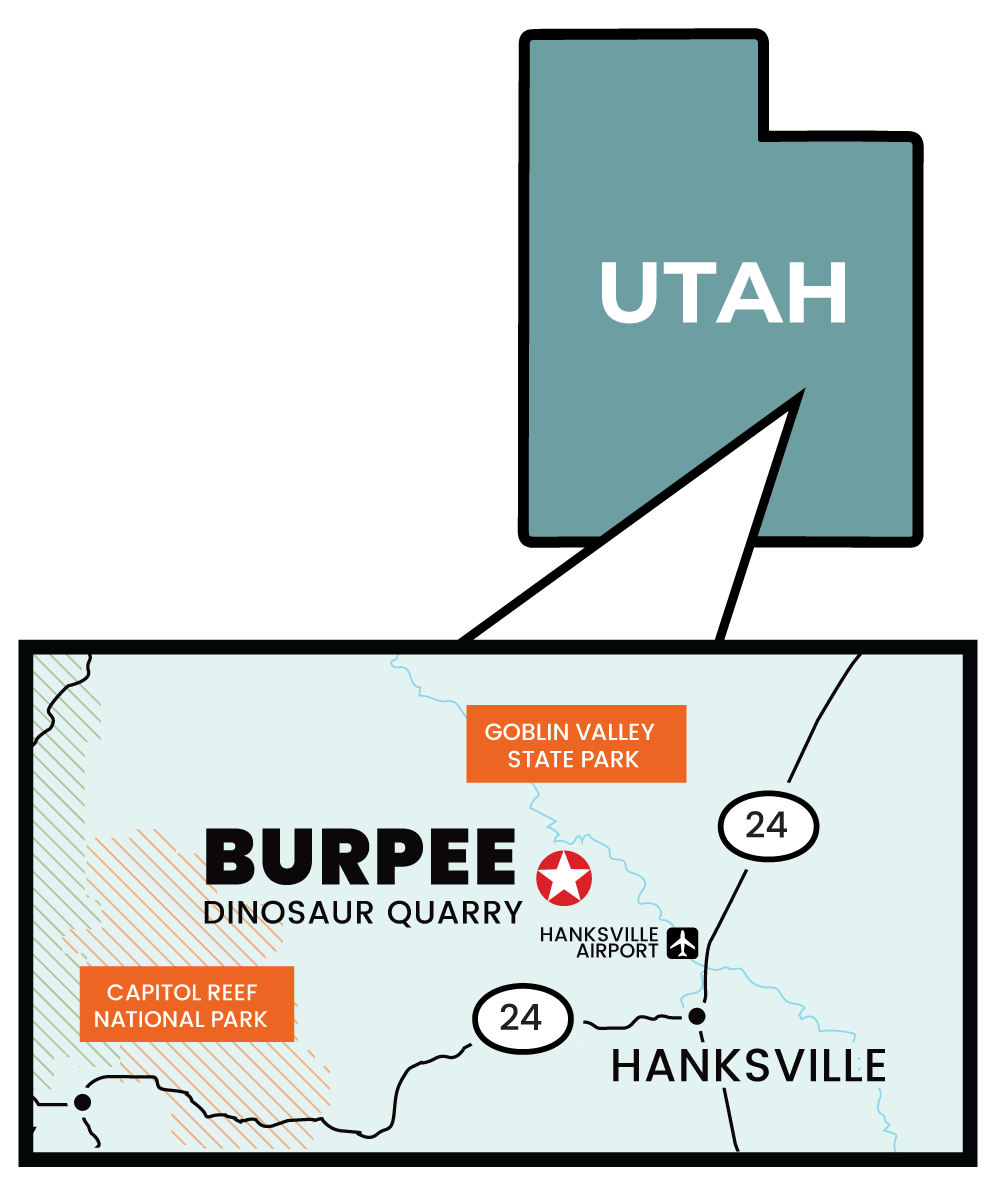
Location: Hanksville, Utah
Expedition Rates
Full Week
-
New Participants: $1500.00
-
Returning Participants/Students/Members: $1300.00
Daily Rates (Minimum of 3 days)
- New Participants: $300/day
- Returning Participants/Students/Members: $275/day
Frequently Asked Questions
Where do participants stay?
Hanksville is a great little town with several hotel options. Hotel is not included in your field admission price. Typical options are (in no particular order) Whispering Sands, Duke’s, and Muddy Creek Mining Company. Participants will be picked up in town and given a ride to the Jurassic Quarry.
What about meals?
Participants typically stop by the local grocery store or gas stations to purchase food for snack lunches. Resturant carry out is also an option. In the evening, participants typically choose one of the local resturants.
What is supplied?
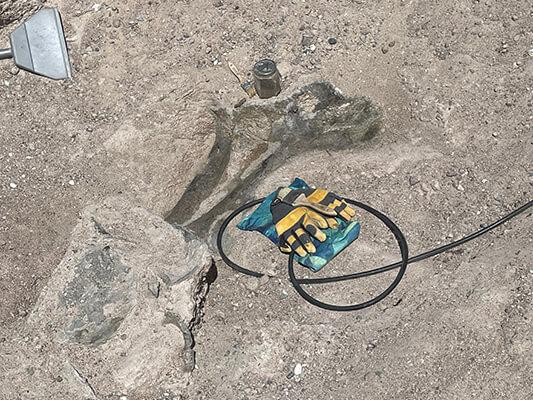
Everything you need to work on the fossils at the dig site is supplied from excavation tools, to gloves, to the generators needed.
What should I bring?
When you come to the dig site, bring a waterbottle (you can refill at the site), snacks (heavy food will be difficult to consume in the heat), comfortable clothing, sunscreen, and bug spray. While there is a shade tent for you, the Utah dessert sun is strong! Consider lightweight clothing to cover your body as sun protection, or a strong sunscreen.
Do I need a car?
If you set up scheduling in advance, Burpee staff are happy to pick you up from the airport and give you a ride to Hanksville. Within town, everything is in walking distance. The dig site is not in walking distance of Hanksville, but museum staff has vehicles with space for all the participants. The staff is happy to give everyone a ride to the dig site.
What Ages Should Dig?
To work on the precious fossils of the Jurassic era for a full week, participants must be at least 16 years old (or have permission of head paloentologist Dr. Mathews). Younger participants may attend through special programming, or for shorter visits.
Who can visit?
ANYONE! The land is BLM land, and therefore open to all guests. The fossils are protected and permits are needed for digging, but you can visit the Burpee crew and get a free tour. If you are on a roadtrip nearby, please stop and say hello!!

HISTORY & SCIENCE OF THE QUARRY
Location
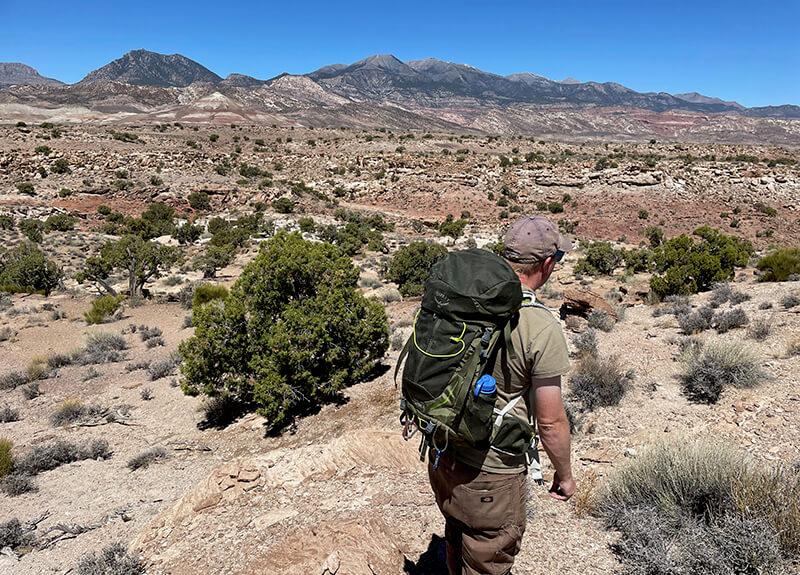
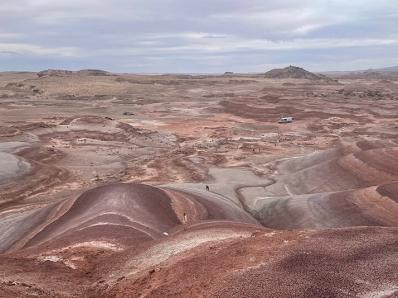
The Hanksville-Burpee Dinosaur Quarry is a dinosaur bonebed located on federal land, administered by the Bureau of Land Management northwest of the town of Hanksville, in south-central Utah, and is one of the largest dinosaur quarries in the United States. The quarry is massive in extent, with a bone-bearing layer extending for a minimum of 1km to the northeast.
Finding Dinosaurs
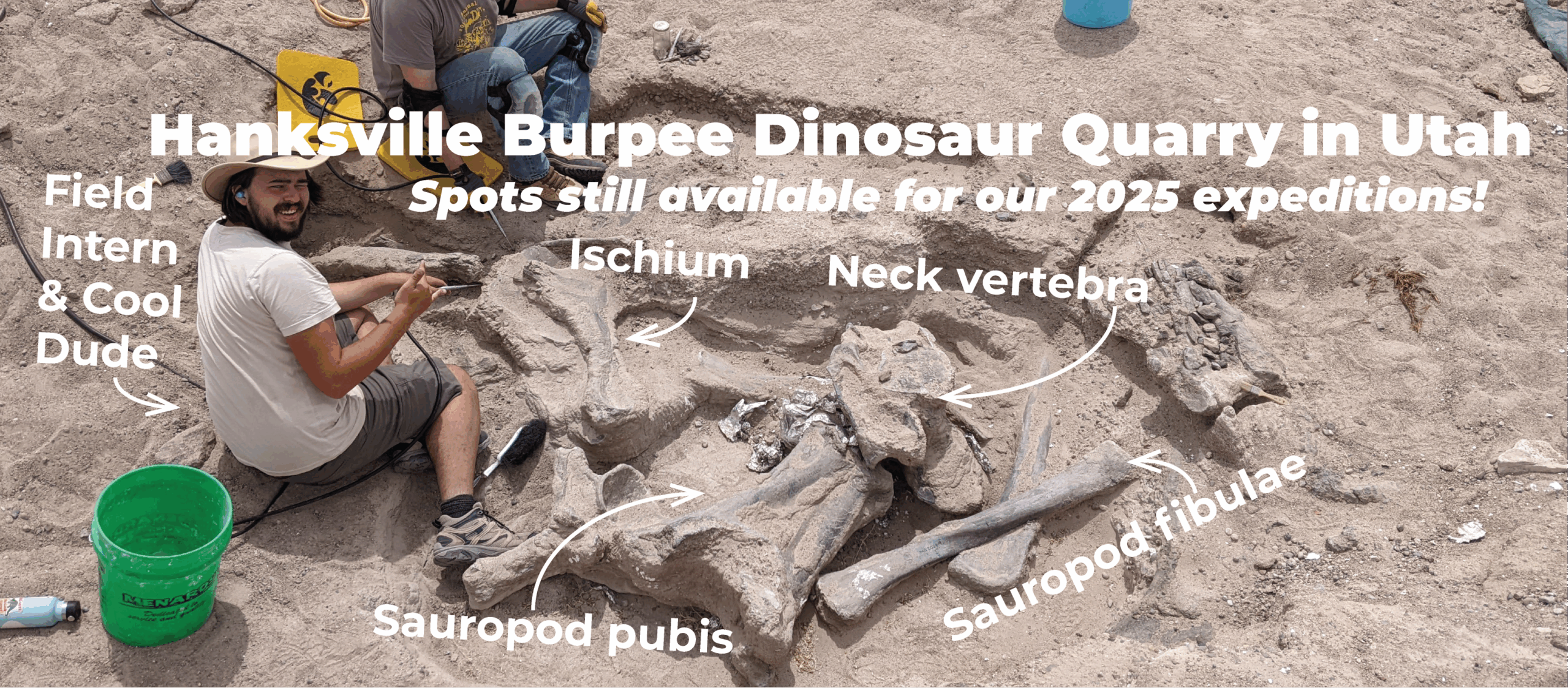
As of the summer of 2017, the deposit preserves the remains of a minimum of 15 different dinosaurs, including a high diversity of taxa. Most prevalent among the fossils are those of the longneck sauropod dinosaurs, primarily Diplodocus. Three other species of sauropod are known from the quarry and include Apatosaurus, Barosarus, and Camarasaurus. The theropod dinosaur, Allosaurus, has been found, as well as the small ornithopod Dryosaurus and the armored dinosaur, Mymoorapelta. Some material may be referable to Stegosaurus; however, further examination is needed to be certain.
History of the Site
In June of 2007, a small crew from the Burpee Museum, led by former Curator of Earth Sciences Michael Henderson, and Collections Manager, Scott Williams, traveled to southern Utah in search of fossils from the Late Jurassic Morrison Formation. Prior to this, Burpee had only led expeditions to the Hell Creek Formation of southeastern Montana, where they were very successful, finding “Jane,” a juvenile Tyrannosaurus rex, and “Homer,” a sub-adult Triceratops. Wanting to expand their research opportunities, they were directed to the Hanksville area by Utah state paleontologist Dr. Jim Kirkland. Dr. Kirkland told Henderson and Williams that this region has vast exposures of Morrison Formation and that no institutions were currently working in the area. After a few days of prospecting, with little to show, the crew contacted Buzz Rackow, a geologist for the Bureau of Land Management. Buzz informed them of an area northwest of town where “rock hounds” have found bone fragments eroding out of the hills for 20+ years; however, no paleontology crews had ever gone to assess the site. The following day he drove the crew to the site, and immediately upon their arrival, they found bone “float” littering the surface. As the group further explored the exposures, they discovered several bones coming out of the ground. They dug around a few but ended up burying them to protect them until the following summer.
Building a Team
The inaugural trip for the volunteer program, now called “Jurassic Journey,” began in the summer of 2008 when Burpee Museum partnered with Dr. Matthew Bonnan of Western Illinois University. Dr. Bonnan is a sauropod expert who was a faculty member in the Department of Biology and was asked to join the project due to his expertise. Dr. Bonnan brought a group of students with him from WIU to assist with the dig. He remained on the project until 2013, when Dr. Michael D’Emic, another sauropod expert from Adelphi University, joined the team. Additionally, Mr. Steve Simpson, a geologist and instructor at Highland Community College in Freeport, Illinois, and a member of the board of trustees for Burpee Museum, also brought student crews out to join in the dig as he has in Montana for many years prior.
While it was already known that there were several bones to be excavated from the previous year, the extent of the deposit was not realized until midway through the first week when an HCC student wandered over to a hill where nobody was working. He soon discovered a large sauropod leg bone eroding from the hill and began excavating it. As he worked around the bone, he came across another leg bone just as large lying next to that. From this point on, the site began to surrender its fossils, bone by bone, and by the end of the first week, there were “badger holes” scattering the site where new bones were being continually discovered. At the end of the first official field season, at the Hanksville-Burpee Dinosaur Quarry, over 200 new bones had been discovered. Further exploration near the quarry led to the discovery of large petrified logs, some reaching lengths of 20-30 feet. Freshwater unionid bivalves (mussels) can also be found at the quarry as well as vertical structures that may be the preserved remnants of mammal burrows or tree root casts. Together, these fossils are representative of a preserved ecosystem located in the middle of the Utah desert. Burpee field crews have returned to the site every summer since and continued to find new discoveries. In total, over 1,000 bones have been removed from the quarry, and just as many remain in the ground waiting to be uncovered.